History of the Gorges du Verdon
Sommaire de l'article
"ONE OF THE NATURAL WONDERS OF FRANCE… AND OF THE EARTH" (E.A. MARTEL)
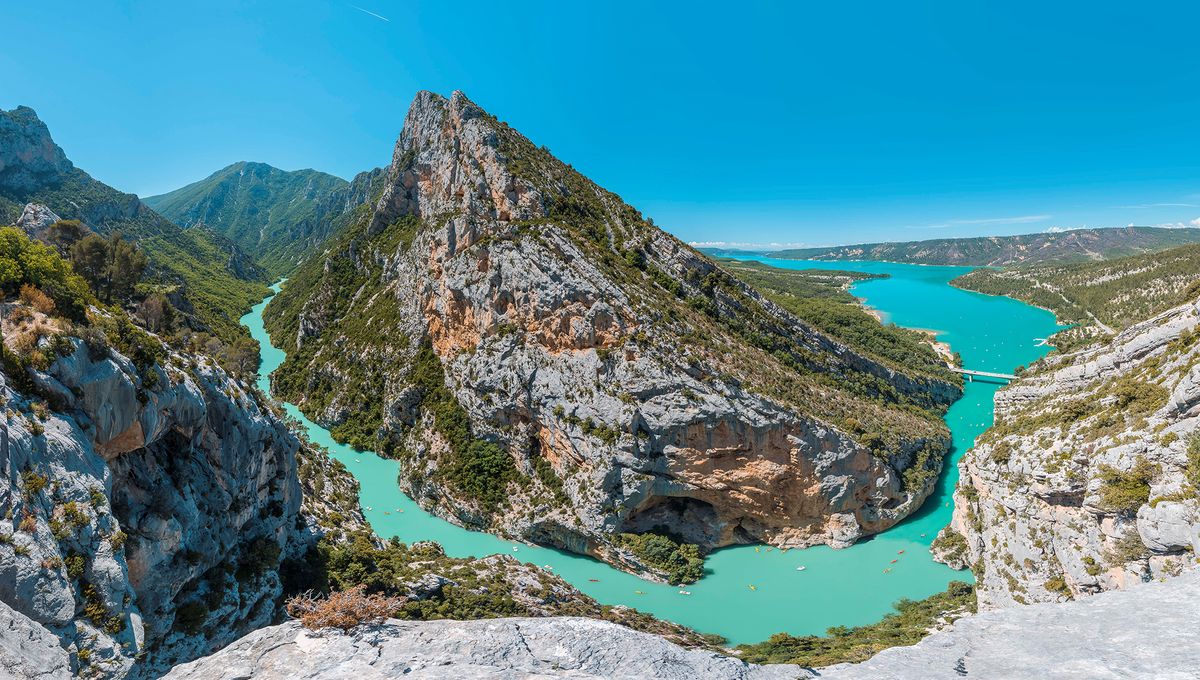
The Gorges du Verdon are the result of 300 million years of limestone sedimentation, carved by the Verdon River to a depth of up to 700 meters. This canyon — the largest in Western Europe — extends for 25 km between Rougon and Lac de Sainte-Croix.
This page traces three chapters: the geography of the site, its geological history, and human settlement from antiquity through modern exploration by Édouard-Alfred Martel in 1905.
Key figures: 25 km in length, 700 m maximum depth, Jurassic limestone formed beneath warm seas 150 to 200 million years ago, and the first complete documented crossing in 1905 by Martel and his team.
PART I
The Gorges du Verdon: A Journey Through Striking Geography

Introduction to the Gorges du Verdon - A Natural and Geological Treasure
The Gorges du Verdon, located in the Provence-Alpes-Côte d'Azur region, are a natural and geological treasure of remarkable beauty. This series of articles explores the grandeur of these fascinating gorges, beginning with their source and their course through the landscape.
The Verdon originates near the Col d'Allos pass, in the Trois-Évêchés massif. Its total length reaches 166 kilometers, from its point of origin to its confluence with the Durance near Vinon-sur-Verdon. Throughout its course, the river crosses various gorges and passages, with the Gorges du Verdon being the third in terms of geological challenge, preceded by the narrows of the Porte de Saint-Jean and Chasteuil upstream, and followed by the gorges of Baudinard and the lower gorges downstream. (Read: The Gorges du Verdon, it's summer... Come reconnect with nature)


The Gorges du Verdon - A Striking Canyon
The Gorges du Verdon are renowned worldwide for their arresting beauty. They begin at the Carajuan narrows and the Carajuan Bridge, just after the confluence with the Jabron. There, the river enters a deep, narrow canyon carved between impressive relief that rises over 1,500 meters in altitude. In comparison, the riverbed sits at 630 meters elevation upstream and 510 meters downstream.
The most striking characteristic of this canyon is its narrowness and depth, with vertical walls of 250 to 700 meters high, while the riverbed varies from 6 to 100 meters wide. At the top of the gorges, the width extends from 200 to 1,500 meters from slope to slope. This remarkable geology has contributed to the worldwide reputation of the Gorges du Verdon as a unique natural site. (Read: The viewpoints of the Gorges du Verdon: Exceptional Panoramas)


The Winding Course of the Verdon
As it progresses, the Verdon takes a general direction westward, then southward, and finally northwest. This magnificent river is fed by various springs and the Artuby, which cuts through its own scenic canyon. As it winds through this dramatic landscape, the river reaches its terminus in Lac de Sainte-Croix, after a 25-kilometer journey from its entry into the gorges. The final passage through the Galetas narrows, crossed by the bridge of the same name, marks a particularly impressive moment of its journey. (Read: The Gorges du Verdon in numbers)


Geographic and Administrative Boundaries
Beyond their natural beauty, the Gorges du Verdon hold geographic and administrative importance. They serve as the boundary between two French departments, the Var to the south and Alpes-de-Haute-Provence to the north. This geographic demarcation adds a unique dimension to this already remarkable region.
The Gorges du Verdon are a geological treasure, a haven of natural beauty, and a must-visit site for nature lovers and adventurers alike. Planning your visit? Consult our practical advice for visiting the Gorges du Verdon.
PART II
The Geological History of the Gorges du Verdon: A Journey Through Time
The Gorges du Verdon are the fascinating result of the turbulent geological history of the Alps. This history began millions of years ago, when tectonic forces began to shape this remarkable region.
The Tertiary Era and the beginning of the Quaternary, approximately 7 to 2 million years ago, were marked by intense tectonic deformation in the Digne and Verdon region. These movements created folding and thrust faults, superimposing sedimentary and tectonic assemblages upon each other. The Gorges du Verdon themselves were carved into the limestone massifs of the Alpine chain displaced southward during this period.
The Verdon, in its course toward the Durance to the west, adapted its path to the deformations of the massifs, cutting its bed through a complex pile of geological layers. The key moment in the history of Mediterranean canyons was the Messinian crisis, approximately 6 million years ago.
During this crisis, the convergence of the African and European tectonic plates interrupted water flow from the Atlantic into the Mediterranean. Sea level dropped dramatically — 1,500 meters — before rising abruptly approximately 5.3 million years ago.
An aerial and underground karst network formed during this period, evolving in parallel with the deformations of the limestone massifs. The Quaternary period, marked by glaciations, reactivated ancient karsts and intensified erosion in areas subject to Alpine uplift.
For more on the site's geology, also consult our article on the Gorges du Verdon in numbers: 25 km, 700 m of cliffs, 300 million years of history.

Geological timeline from the site:

The geological history of the Gorges du Verdon remains a subject of debate among geologists, and new research is underway to find additional clues. What is certain is that the current landscape of the Gorges du Verdon is the result of complex geological history, with traces of the last glaciation approximately 90,000 to 11,000 years ago.
For more, visit Geological Adventure.
PART III
Human Settlement in the Gorges du Verdon Through the Ages
The Gorges du Verdon, today a picturesque place cherished by nature lovers, have a rich and varied history of human settlement. This section takes you through the ages, from the earliest traces of occupation to the more recent transformations of this exceptional region.
The earliest traces of human occupation in the Gorges du Verdon date back to a remote time, between 400,000 and 600 before Christ. Originally, the first populations were nomadic, living from hunting, fishing and gathering. The many caves scattered throughout the gorges served as essential shelters for these early inhabitants.
A major turning point occurred with the arrival of Neolithic Man around 6,000 BC. These sedentary groups developed grouped settlements in the Verdon region, becoming herders and farmers. They mastered the art of wool spinning, pottery, and even erected dolmens. Commercial exchanges also flourished during this period.


Antiquity - From 600 BC to the End of the 5th Century AD
In Antiquity, the Romans had a major impact in the Gorges du Verdon region. Around 118 BC, they created a province called Narbonensis in the transalpine part. Further east, Emperor Augustus established the province of Alpes-Maritimes, with the border near the present-day village of Rougon. During this period, two cities emerged: Salinæ (Castellane), known for its salt water springs, and Riez, which became the seat of a colony and developed in the Colostre plain.
Under Roman rule, most of the Verdon was focused on agriculture, with many rural settlements, including vast agricultural estates called villae, which prospered in the region.
The Early Middle Ages, Frankish Domination and Independence
During the Early Middle Ages, the region experienced major political changes. In 536, it was attached to the kingdom of the Franks. However, in 879, it regained its independence. This period was also marked by Moorish occupation in 880, with raids extending into the Alps.
The Medieval Period - From the 11th to the End of the 13th Century
The medieval period was marked by feudal reorganization, monastic renewal, and great flowering of Romanesque art. It was a period of prosperity characterized by the development of cities and trade.
Periods of Crisis - 15th and 16th Centuries
The 15th and 16th centuries brought major socio-economic crises, notably epidemics of bubonic plague that caused devastation. Provence gradually integrated into the kingdom from 1481.
However, this era also saw the development of local industry, with growing population, village development, and the emergence of new economic activities.
The 17th and 18th Centuries - Growth of Local Industry
In the 17th century, the population continued to grow, villages developed, and local nobility allied with the rising bourgeoisie. This marked the beginning of local industry, with sectors such as glassmaking, pottery, and hydraulic infrastructure. Moustiers-Sainte-Marie became one of France’s largest pottery centers under the reign of Louis XIV.
The 18th Century - The Enlightenment and Its Challenges
The 18th century was marked by the Enlightenment, with local figures such as Father Marc de Bauduen and Abbé Bausset. However, this period was also shadowed by the great plague of 1720, which struck Provence, emptying it of its population.
Great Changes - 19th and 20th Centuries
The 19th century witnessed profound social, technical and economic changes in the Gorges du Verdon region. These transformations affected landscapes, ways of life, and territorial organization.
In the 20th century, the Gorges du Verdon were “discovered” by geologist Edouard-Alfred Martel, although local inhabitants had always explored these gorges for various activities. The construction of dams, the Canjuers military camp...
Adaptation Through the Ages
Faced with all these transformations and changes, the inhabitants of the Gorges du Verdon chose to adapt by developing new activities respectful of their territory. This varied history testifies to the resilience and adaptability of the region through the centuries, creating a rich and diverse heritage that visitors can still appreciate today.

🏗️ A Rich Historical Heritage
The Gorges du Verdon have witnessed 300 million years of geological transformation and thousands of years of human history. Each layer tells a story of adaptation and resilience in one of Europe’s most dramatic landscapes.
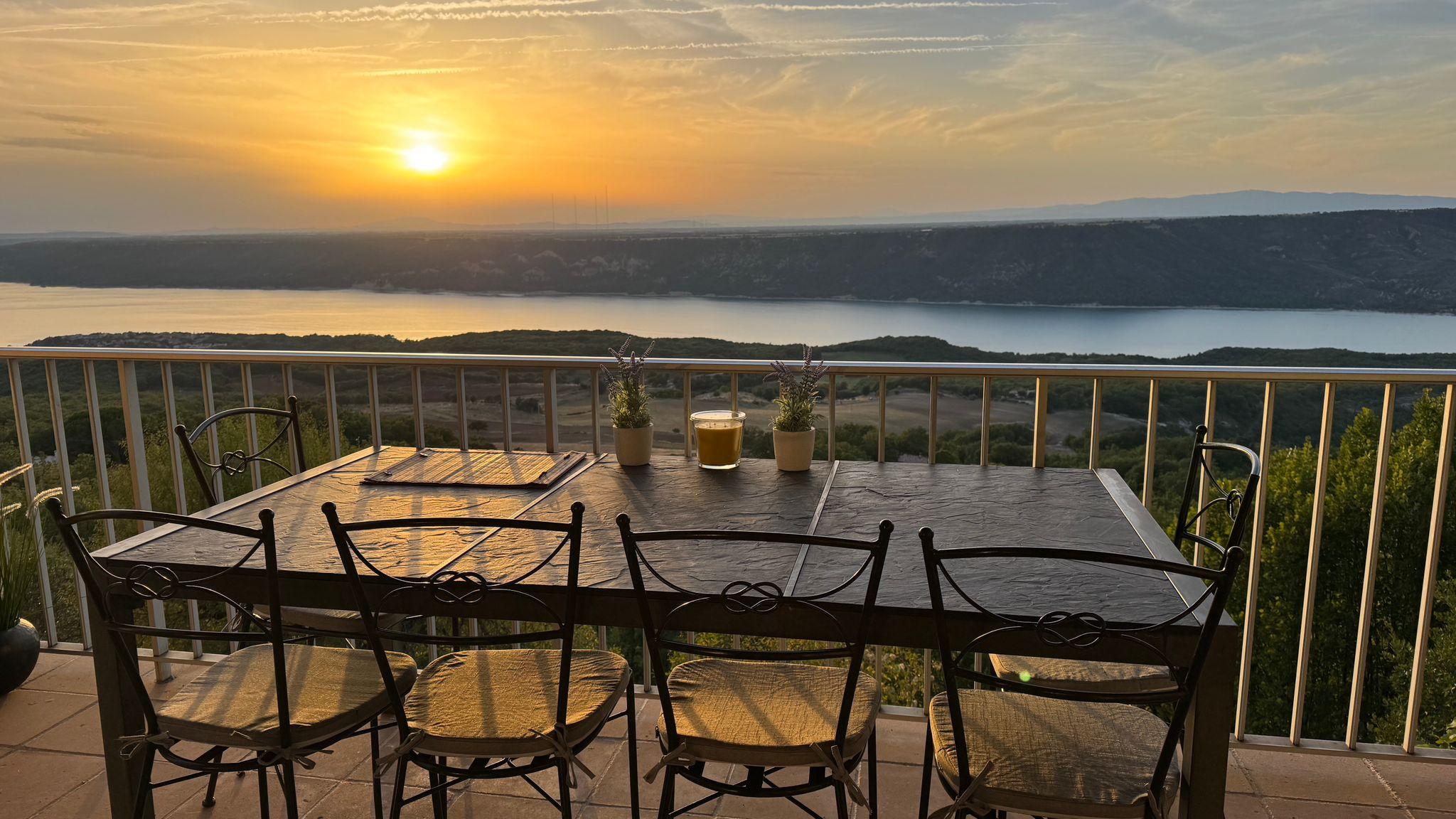
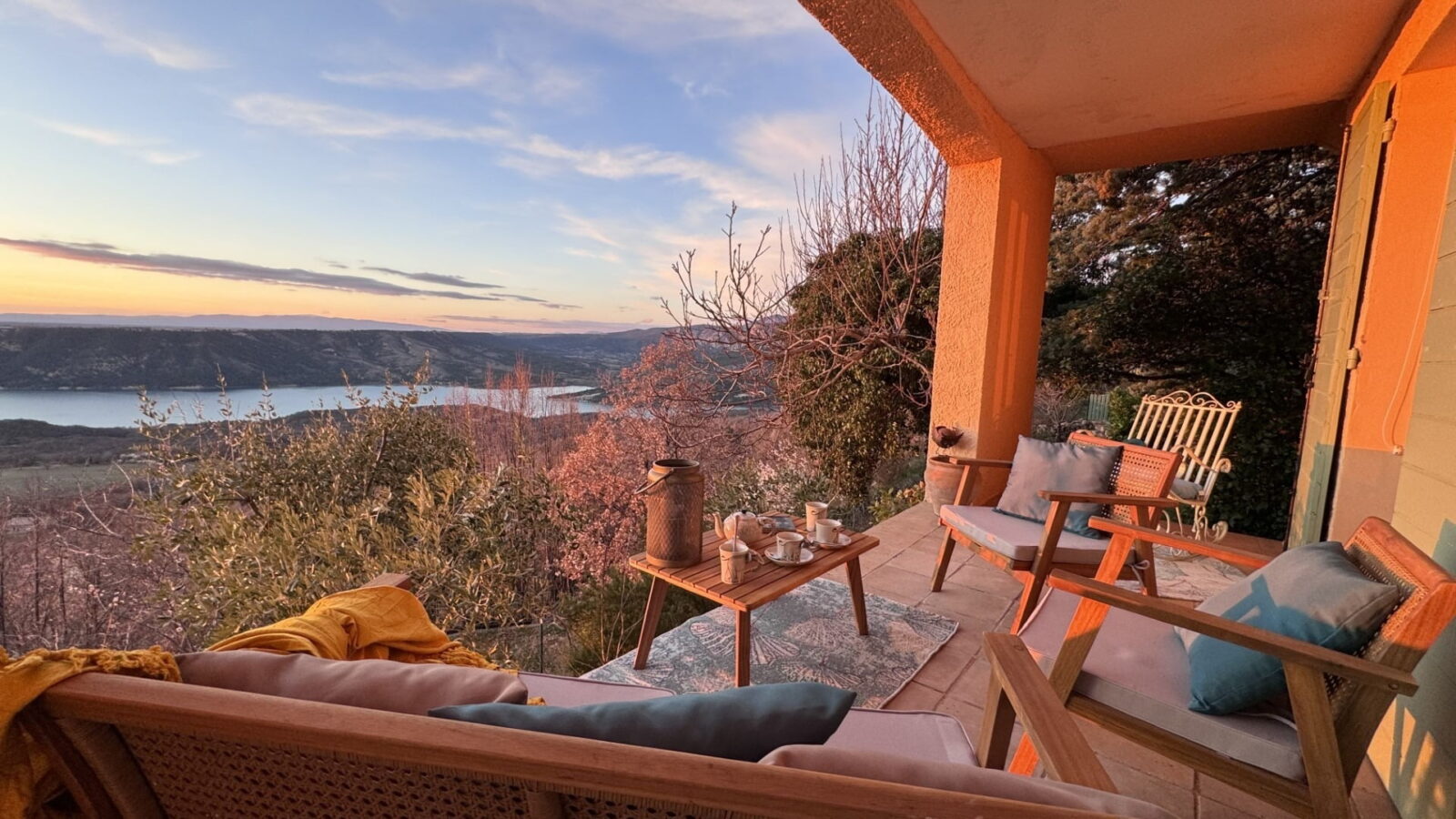
Charming house (6 pers., 3 bedrooms, ground floor, 110m² with spacious living area) with panoramic view of Lake Sainte-Croix. Quiet, 2 min walk from the village centre. Preserved nature & ideal base for outdoor activities and tourism.