Secret Treasures of the Verdon: Panoramas, Geology, and Untamed Naturenn
Tucked deep within the Grand Canyon du Verdon, far from the crowded viewpoints and busy beaches, lie hidden wonders waiting to be discovered. These secret spots — accessible only to the most curious and adventurous visitors — offer an intimate encounter with truly wild nature. Here is our selection of the 8 best-kept secrets of the Gorges du Verdon.nn
Belvédère de Rancoumas: A Dizzying Panorama Above the VerdonnnA Secret Viewpoint Over the Canyonnn
This isolated viewpoint sits in the middle of a roadless section of the gorges, facing the lookouts along the Route des Crêtes. Accessible only on foot, it remains a wild spot where you'll encounter just a handful of hikers. The reward is a breathtaking view of the canyon, encompassing the gorges and their towering cliffs.nn
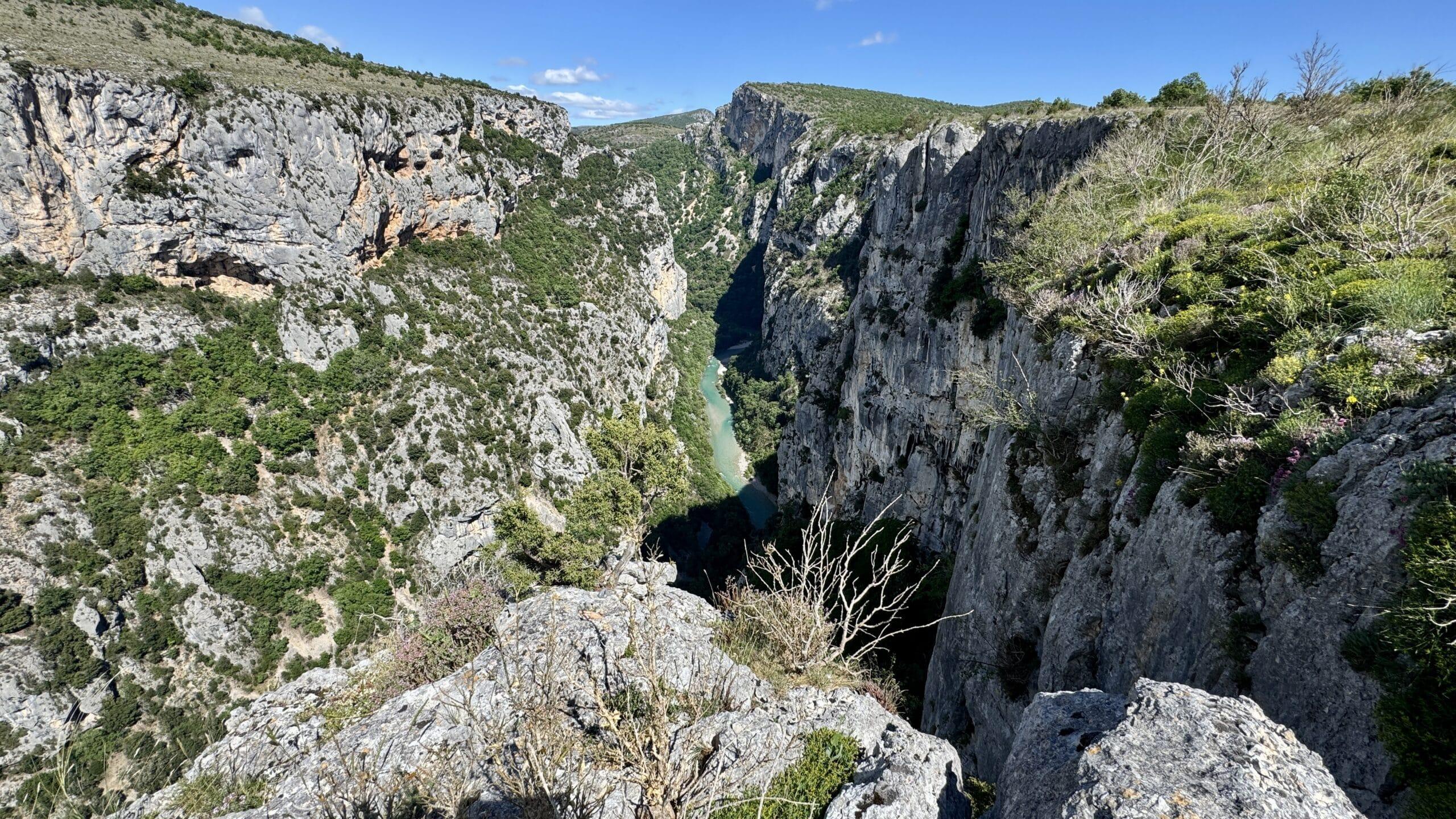
Perched high on the left bank, the natural viewpoint of Rancoumas offers a dizzying panoramic view over the gorges — a spectacular sight that only hikers can earn. This isolated promontory can only be reached on foot, after a challenging hike from the village of Rougon (via the GR49 trail through the Pont de Tusset) or from Trigance, which keeps visitor numbers remarkably low. There's a genuine end-of-the-world feeling here: the only sounds are the whistle of wind along the rock faces and the cry of raptors overhead.nn
Carefully approaching the edge, your gaze drops 400 metres to the turquoise ribbon of the Verdon snaking between the cliffs below. Across the canyon, the walls of the Escalès rise like a limestone cathedral where you can sometimes spot tiny silhouettes — fearless climbers — and the majestic glide of reintroduced griffon vultures soaring above their aerial kingdom.nn
At the Belvédère de Rancoumas, you feel privileged, alone in the world before the immensity of the Grand Canyon — a suspended moment that few Verdon visitors can claim to have experienced.nn
Practical informationn
- n
- Location: Commune of Trigance, right bank.n
- Access: Marked trail from the hamlet of Rancoumas (2 hours return).n
- Highlights: Spectacular canyon viewpoint, guaranteed vertigo.n
- Useful link: Belvédère de Rancoumas – Provence Webnnn
Styx & Imbut: The Emerald Passage and the Mysterious Funnelnn
Deep in the Heart of the Verdonnn
If you want to explore the depths of the canyon, the Sentier Blanc-Martel is the hike that will take you to the very heart of the gorges. Allow a full day and check out our practical tips for visiting the Verdon before setting off.nn
The Styx du Verdon is a place of exception where the river, in a distinctive emerald hue, has carved a narrow and strikingly beautiful passage. Just downstream lies the Imbut — a place of fury where the Verdon vanishes into the rock before emerging further on — one of the most spectacular geological phenomena in the canyon. These wonders are accessible via the adventurous Imbut trail, considered one of the most beautiful (and technical) hikes in the Gorges du Verdon.nn
In the depths of the Grand Canyon, where the rock walls close in until only a sliver of sky remains, lies a legendary place: the Styx du Verdon. To reach it, you must follow the Imbut trail, a steep path that plunges into the most intimate recesses of the gorges from the Estellier footbridge (left bank). After a winding trek among boulders and through woodland, you suddenly emerge into a narrow mineral corridor where the Verdon takes on a deep emerald hue.nn
Here, the river has carved what amounts to an open-air underground passage, nicknamed the Styx after the mythological river of the Underworld. The atmosphere is mysterious: the Verdon surges between walls so close together that it forms turquoise pools and dark cavities. You make your way along the water's edge, awestruck by the silent power of the river.nn
A little further on, the rumbling intensifies: this is the Imbut ("the funnel" in Provençal), the climax of the journey. Here, the Verdon abruptly disappears beneath enormous rock slabs, plunging into the bowels of the cliff with a deafening roar. The spectacle is both fascinating and intimidating — a true leap into the aquatic unknown. The cool dampness and dim light lend an otherworldly quality: you feel tiny, witnessing a geological force at work for millennia. Retracing your steps and leaving the Styx behind feels like emerging from another world, enchanted by this hidden jewel of the Verdon.nn
Practical informationn
- n
- Location: Imbut trail, left bank, starting from Auberge des Cavaliers (Aiguines).n
- Access: Challenging hike with technical sections, not recommended in wet weather.n
- Highlights: Deep gorge, turquoise water, impressive rock formations.n
- Useful link: Imbut Trail – Provence-Alpes Tourismennn
Tunnel du Baou (Couloir Samson): Between Shadow and Wild Balconynn
From the Couloir Samson to the Garde Trailnn
The Couloir Samson is one of the most spectacular sections of the canyon. It forms part of the legendary Sentier Martel, the iconic long-distance hike through the Gorges du Verdon. To plan your day, check out our guide to the 15 must-do activities in the Verdon.nn
The Tunnel du Baou (Couloir Samson) is part of the Blanc-Martel trail: 670 metres long and unlit, it leads to the spectacular opening of the Baume aux Pigeons, a cave mid-way through the tunnel that offers one of the wildest views of the Gorges du Verdon. Meanwhile, in the lower gorges, the garde-canal trail at Quinson reveals former aqueduct tunnels. The canal's construction between 1864 and 1875 was a titanic undertaking: 10 years of labour and 20 km of tunnels dug by hand to channel the Verdon's water.nn
Light on one side, darkness on the other — that is the unusual experience awaiting those who venture into the Verdon's secret tunnels. At the bottom of the Couloir Samson — the narrow downstream entrance to the Grand Canyon — a wide gaping vault opens in the cliff face. This is the Tunnel du Baou, a 670-metre stone corridor piercing through the rock. Lamp in hand, explorers advance through the darkness along the original route of the Sentier Martel, accompanied only by the sound of dripping water and the echo of their footsteps.nn
Suddenly, halfway through, an emerald glow appears through a huge natural "window": this is the Baume aux Pigeons, a cavity opening like a balcony over the gorge. This secret viewpoint, nestled within the tunnel, offers one of the wildest views of the Gorges du Verdon — a striking tableau of the river below, framed by inaccessible cliffs.nn
Beyond this spectacle, the tunnel reclaims its darkness, leading to the Tours de Trescaïre, three rocky pinnacles marking the end of the route. Walking through this passage, carved in the 1920s, feels like travelling inside the mountain itself, following in the footsteps of the canyon's first explorers.nn
Practical informationn
- n
- Location: Gorge entrance on the Castellane side (Point Sublime).n
- Access: Via the Sentier Blanc-Martel; bring a headlamp for the tunnel.n
- Highlights: Direct view of the Couloir Samson, spectacular canyon entrance.n
- Useful link: Blanc-Martel Trail – Verdon Tourismennn
Caves of Saint-Maurin: A Secret Cavern in the Heart of the Canyonnn
A Hidden Troglodyte Sanctuarynn
The Saint-Maurin nature reserve (26 hectares) stands out for its travertine formations and numerous springs at the base of the cliff, creating a uniquely cool atmosphere. The site contains man-made caves that served as a hermitage since the early Middle Ages. The troglodytic features visible in several cavities confirm that the site was used well into recent times, adding to its magical allure. Access is free, on foot only, via marked trails.nn
A petrified waterfall cascades down a rock face draped in lush vegetation. Welcome to Saint-Maurin, on the right bank of the gorges, where abundant springs burst from the Barbin cliff, forming verdant tufa deposits. Behind these travertine cascades lie centuries-old caves, shaped by human hands over the ages.nn
Following a discreet path from the D952 road (near the Col de l'Olivier), you reach this unsuspected oasis of freshness — a true haven in the rock, hidden from all eyes. Beneath the natural shelter of the cliff, you discover the troglodytic caves of Saint-Maurin, whose cavities and dry-stone walls tell a thousand-year story.nn
The atmosphere is timeless: you can imagine the lives of those who retreated here, praying to the sound of flowing water. Today, the place retains a mystical aura. Moss carpets the damp rocks, giant ferns line the path, and nothing but the quiet song of the spring disturbs the peace. Saint-Maurin is a well-kept Verdon secret where exuberant nature and hidden heritage combine to offer an enchanting interlude for the curious hiker.nn
Practical informationn
- n
- Location: Left bank, between La Palud-sur-Verdon and Castellane.n
- Access: Via the roadside trail or local marked paths.n
- Highlights: Petrifying spring, waterfalls, tufa walls.n
- Useful link: Caves of Saint-Maurin – Rando Verdonnnn
Pont de Tusset: Crossing an Improbable Suspension Over the Verdonnn
Secret Swimming and Medieval Stonenn
The Pont de Tusset is an old arched bridge (first built in the 11th century, later rebuilt) located downstream of the Couloir Samson. Accessible via an easy trail (GR49), it makes for a perfect walk to enjoy a special moment in the Verdon: a calm, preserved spot far less crowded than the main gorges. The river is easily accessible here for a refreshing dip, and the surroundings remain wild — a peaceful haven at the bottom of the canyon, well worth the detour for those seeking the authentic Verdon.nn
Around a bend in a shaded path, after a short 20-minute descent from the Couloir Samson car park, a charming humpback stone bridge appears, spanning the Verdon. The Pont de Tusset, with its arched 17th-century silhouette, looks straight out of a fairy tale.nn
Here, the Verdon becomes peaceful: far from the enclosed rapids, it spreads into a calm current around a small white pebble beach. The spot is ideal for a swim in the wild, almost in complete privacy. Nestled in a green setting at the bottom of the gorges, this discreet river access offers crystal-clear, refreshing water where you can immerse yourself in perfect tranquillity, away from the crowds.nn
Only a handful of hikers and canyoning enthusiasts know this secret corner for picnicking on the banks or resting in the shade of the cliffs. The rustic charm of the old bridge adds to the sense of escape: crossing it, you feel the weight of centuries and imagine the shepherds of old connecting the two banks. Time seems to stand still here. Birdsong and the lapping of water accompany the lucky swimmers.nn
Far less busy than other Verdon areas, the Pont de Tusset is a hidden paradise, perfect for savouring the absolute calm of the canyon before heading back up the (admittedly steep, but short) trail. In the late afternoon, the setting sun gilds the bridge stone and surrounding walls — a scene of absolute serenity.nn
Practical informationn
- n
- Location: Downstream of Point Sublime, left bank access.n
- Access: Easy hike from Rougon (about 1 hour return).n
- Highlights: Historic stone bridge, views of emerald-green water.n
- Useful link: Pont de Tusset – Rougonnnn
Baume aux Pigeons: An Emerald Window Over the Gorgesnn
The Secret Window on the Canyonnn
The Baume aux Pigeons is a natural cavity hidden deep in the gorges, on the commune of Rougon (Alpes-de-Haute-Provence). It is found at the end of the famous Sentier Blanc-Martel, right at the start of the Couloir Samson section, inside a long tunnel carved through the rock known as the Tunnel du Baou. After about 400 metres in this dark tunnel (torch essential), an opening in the wall gives access to the Baume aux Pigeons.nn
From this "baume" (cave) perched in the cliff face, you enjoy an impressive panorama over one of the wildest sections of the Gorges du Verdon. Your gaze plunges down to the Verdon below, with its waters — sometimes calm, sometimes tumultuous — that have carved the canyon over millennia.nn
The atmosphere surprises with its contrast: inside, the air is cool and damp, with an echo amplifying the murmur of the torrent, while outside the Provençal heat can be stifling in summer. The Baume aux Pigeons likely owes its name to the many birds (pigeons and others) that shelter in its recesses.nn
In the past, a small passage allowed descent from the Baume aux Pigeons to the river's edge, but following several accidents this access has been closed — the rock is extremely slippery. Looking up, you may sometimes spot the silhouettes of a few adventurers in wetsuits in the current below: these are groups practising aqua-hiking in the Couloir Samson, an easy form of canyoning at the entrance to the gorges. This rare human presence only adds to the wild, secret character of the Baume aux Pigeons, which remains a favourite off-the-beaten-track spot among those in the know.nn
Practical informationn
- n
- Location: Near the Couloir Samson, left bank.n
- Access: Via the Sentier Blanc-Martel, equipped passage.n
- Highlights: Large cavity offering a unique view of the Verdon.n
- Useful link: Baume aux Pigeons – Alpes de Haute-Provence Tourismennn
Île de Costebelle: A Green Oasis in the Middle of the Verdonnn
The Forgotten Jewel of Lac de Sainte-Croixnn
The Île de Costebelle can only be visited by boat or pedalo from the Lac de Sainte-Croix. Set off from the Pont de Galetas at the entrance to the gorges and follow the turquoise shores of the Lac de Sainte-Croix to reach this discreet gem.nn
The Île de Costebelle is the only island on the Lac de Sainte-Croix, the large man-made lake that marks the downstream end of the Gorges du Verdon. It sits opposite the village of Les Salles-sur-Verdon, just a hundred metres or so from the shore (the distance varies slightly with the water level). You can easily reach it by light watercraft: pedalo, kayak, or paddleboard from Les Salles beach will get you there in just a few minutes.nn
Once you arrive, you step onto a small beach and feel "alone in the world" on this green islet. This speck of land offers a spectacular 360° panorama of the Lac de Sainte-Croix and the surrounding Provençal hills. Walking around the island (a short stroll through woodland), you discover unique views of Les Salles village and the vast blue expanse of the lake. The scenery has a touch of adventure: with its dense vegetation and isolated beaches, Costebelle evokes a Robinson Crusoe landscape in the heart of the Verdon — an ideal spot for a relaxing break away from the busy tourist shores.nn
Historically, the Île de Costebelle is actually the summit of a former hill. Before the Sainte-Croix dam was filled, it overlooked the old village of Les Salles and the Verdon valley. In 1974, when the lake was created, the entire valley was submerged except for this peak, which remained above water. Costebelle is thus the sole surviving summit of the former landscape — the village of Les Salles was rebuilt higher up, on the opposite shore. It's moving to think that beneath the waters, roughly 35 metres below, lie the traces of the old drowned village.nn
Despite its small size (a few hectares at most), the islet harbours interesting biodiversity. The vegetation mirrors that of the lake shores: holm oaks, Aleppo pines, thyme, and other Mediterranean scrubland shrubs. The woodland cover and the tranquillity of the setting provide a refuge for many birds (herons, gulls, passing wild ducks), as well as small reptiles and mammals that enjoy the lack of human disturbance. Note that to preserve this ecosystem, it is officially prohibited to land on the island: visitors are encouraged to circle it by boat without disembarking.nn
Practical informationn
- n
- Location: Lac de Sainte-Croix, near the Pont de Galetas.n
- Access: By canoe, paddleboard, or electric boat from the lake.n
- Highlights: Small wooded island, perfect for a picnic on the water.n
- Useful link: Aiguines Water Sports Centre – Verdonnnn
Baou Béni: The Forgotten Mineral Passage of the Canyonnn
The Hidden Sanctuary of the Verdonnn
In the heart of the Gorges du Verdon, in one of the most inaccessible sections of the canyon, lies a little-known place: the Baou Béni. Its Provençal name means "blessed rock." Here, the Verdon plunges into a narrow bottleneck where the walls close in, and the river disappears at times beneath immense boulders. Access is reserved for experienced hikers only.nn
The Baou Béni is a secret place nestled in the heart of the Gorges du Verdon, in the most enclosed and inaccessible portion of the canyon. The Provençal term baou béni literally means "blessed rock" or "blessed cave." It refers to a narrow passage where the Verdon surges between cliffs that nearly touch. This spot lies downstream of the famous Imbut — the point where the Verdon disappears under a mass of boulders — and marks the end of the Imbut trail, one of the most demanding hiking routes in the gorges.nn
To get there, start from the Aiguines side (Var) and descend to the canyon floor via the Imbut trail, then continue beyond the Imbut itself along the river to the narrows of Baou Béni. This final section is not officially marked and involves scrambling through a chaos of rock blocks. Only seasoned hikers dare to venture here, which is why the Baou Béni remains an unspoilt place virtually free of visitors.nn
Arriving at the Baou Béni is like entering an unsuspected mineral world. The gorge narrows to barely a dozen metres between the two walls, which soar vertically on either side for hundreds of metres. This is an even tighter bottleneck than the famous Styx upstream, so constricted that even canyoneers must bypass this passage overland. In this dark corridor, the Verdon flows and churns, disappearing at times beneath blocks to form hidden beaches and pools.nn
The spot receives little direct sunlight, creating a cool, damp microclimate where mosses and ferns carpet the rocks near the water. A few tenacious shrubs manage to grow in the cliff fissures — a striking image of life clinging to bare rock. The only sound is the rumble of the river.nn
The historic 1905 expedition led by Édouard-Alfred Martel had to confront the Baou Béni during the first exploration of the gorges: after camping at the Imbut, Martel and his men resumed their progress on 13 August towards the Baou Béni, facing the daunting chaos of the Imbut and extreme obstacles in the canyon. Legend has it that Martel even considered turning back at one point before his companions encouraged him to press on.nn
Today, the Baou Béni still represents the end of the adventure: beyond it, there is no passable trail and you must turn back — unless you continue by swimming in the Verdon. Few hikers reach this point. Those who do turn around here — beyond, you must swim.nn
Practical informationn
- n
- Location: Left bank, between the Styx and the Imbut.n
- Access: Demanding hike with technical sections.n
- Highlights: Narrow rock passage, wild and isolated atmosphere.n
- Useful link: Baou Béni Trail – Rando Verdonnnn
Further Readingn
- n
- Complete guide to the Gorges du Verdon — map, seasons, accessn
- Viewpoints of the Gorges du Verdon — exceptional panoramasn
- Sentier Blanc-Martel — the great canyon hiken
- Lac de Sainte-Croix: complete guide — beaches, boats, viewpointsn
- 2-day / 3-day / 1-week Verdon itinerariesnnn
nVilla OVerdon — Your Ideal Base in Aiguinesn
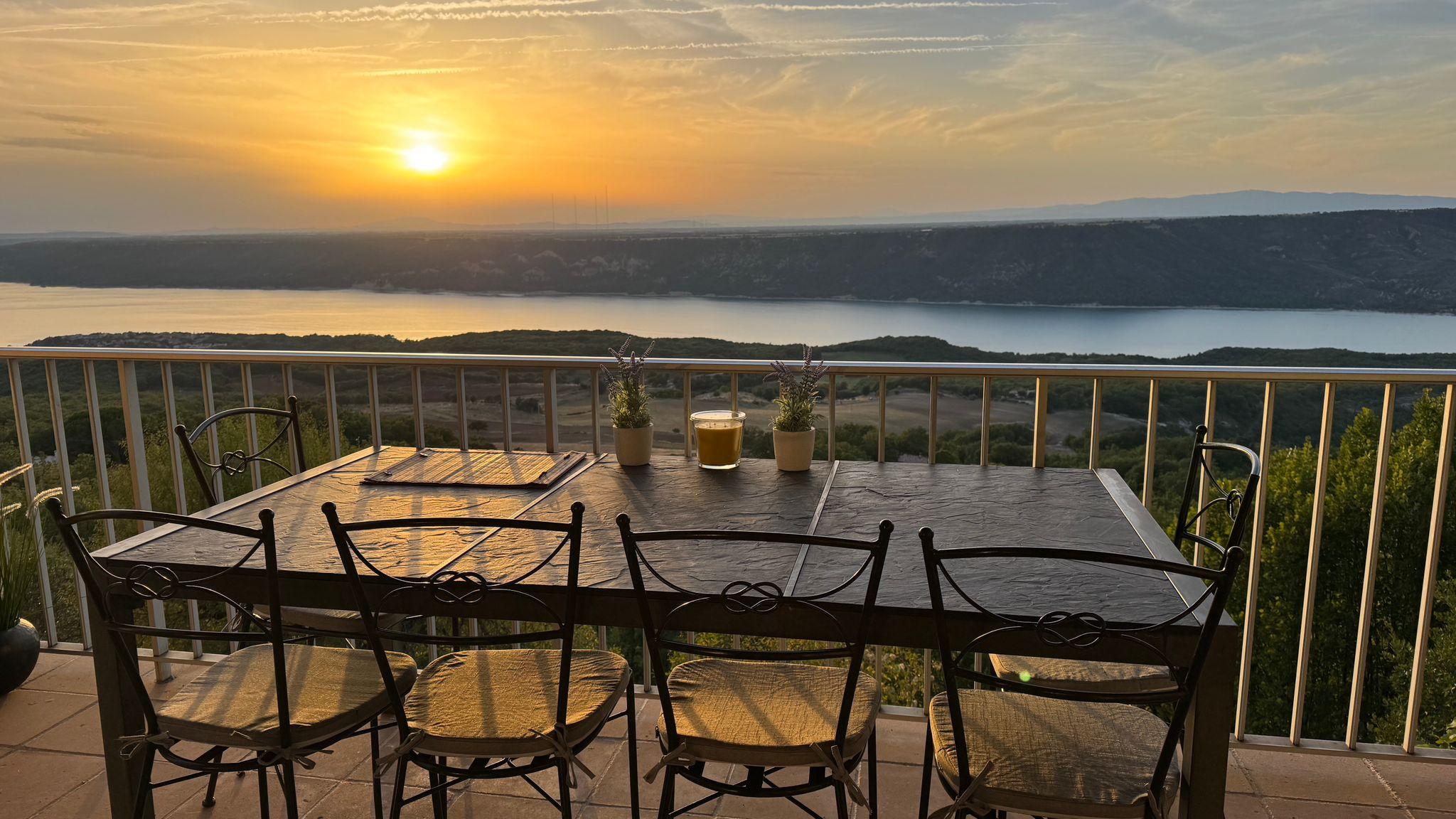
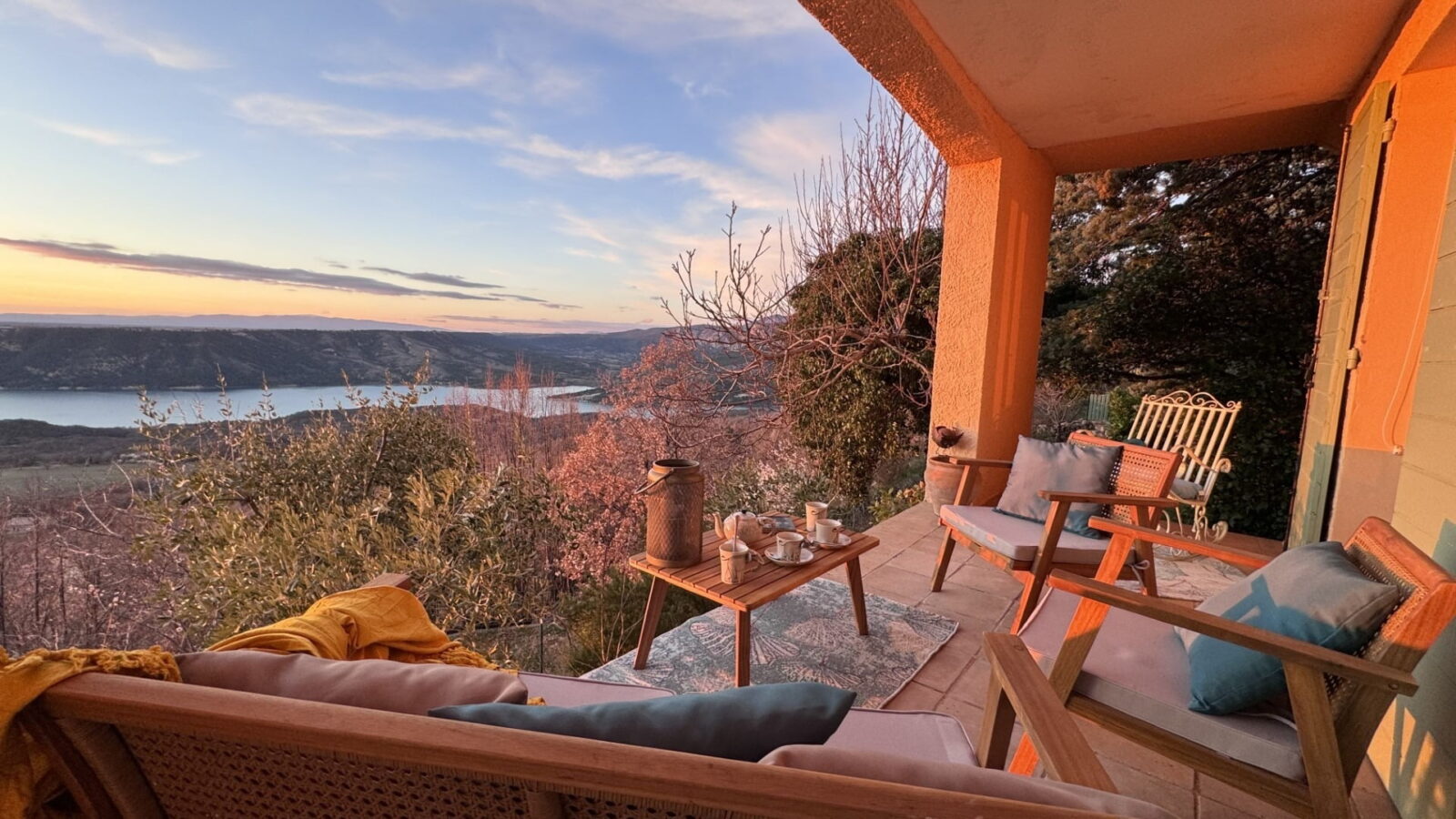
Stay at Villa OVerdon in Aiguines, just minutes from these hidden gems. Enjoy the comfort of a fully equipped holiday villa with a swimming pool, set in the heart of the Verdon. The perfect base to explore the canyon's best-kept secrets at your own pace.n
- Viewpoints of the Gorges du Verdon — exceptional panoramasn
- Access: Demanding hike with technical sections.n
- Access: By canoe, paddleboard, or electric boat from the lake.n
- Access: Via the Sentier Blanc-Martel, equipped passage.n
- Access: Easy hike from Rougon (about 1 hour return).n
- Access: Via the roadside trail or local marked paths.n
- Access: Via the Sentier Blanc-Martel; bring a headlamp for the tunnel.n
- Access: Challenging hike with technical sections, not recommended in wet weather.n
- Access: Marked trail from the hamlet of Rancoumas (2 hours return).n
Charmante maison (6 pers., 3 ch. en rez de jardin, 110m² dont spacieux espace séjour/cuisine) avec vue panoramique sur le lac Sainte-Croix. Calme, à 2 min du centre du village à pied. Nature préservée & base idéale pour activités de pleine nature et tourisme.